AI in video game development: what it can do today (and what it can’t) IA en el desarrollo de videojuegos: qué puede hacer hoy (y qué no)
Artificial intelligence already speeds up many stages of a project, but it isn’t magic. We explain where it really adds value, its limits and what to ask a studio before you start. La inteligencia artificial ya acelera muchas fases de un proyecto, pero no hace magia. Te explicamos dónde aporta valor de verdad, cuáles son sus límites y qué preguntar a un estudio antes de empezar.
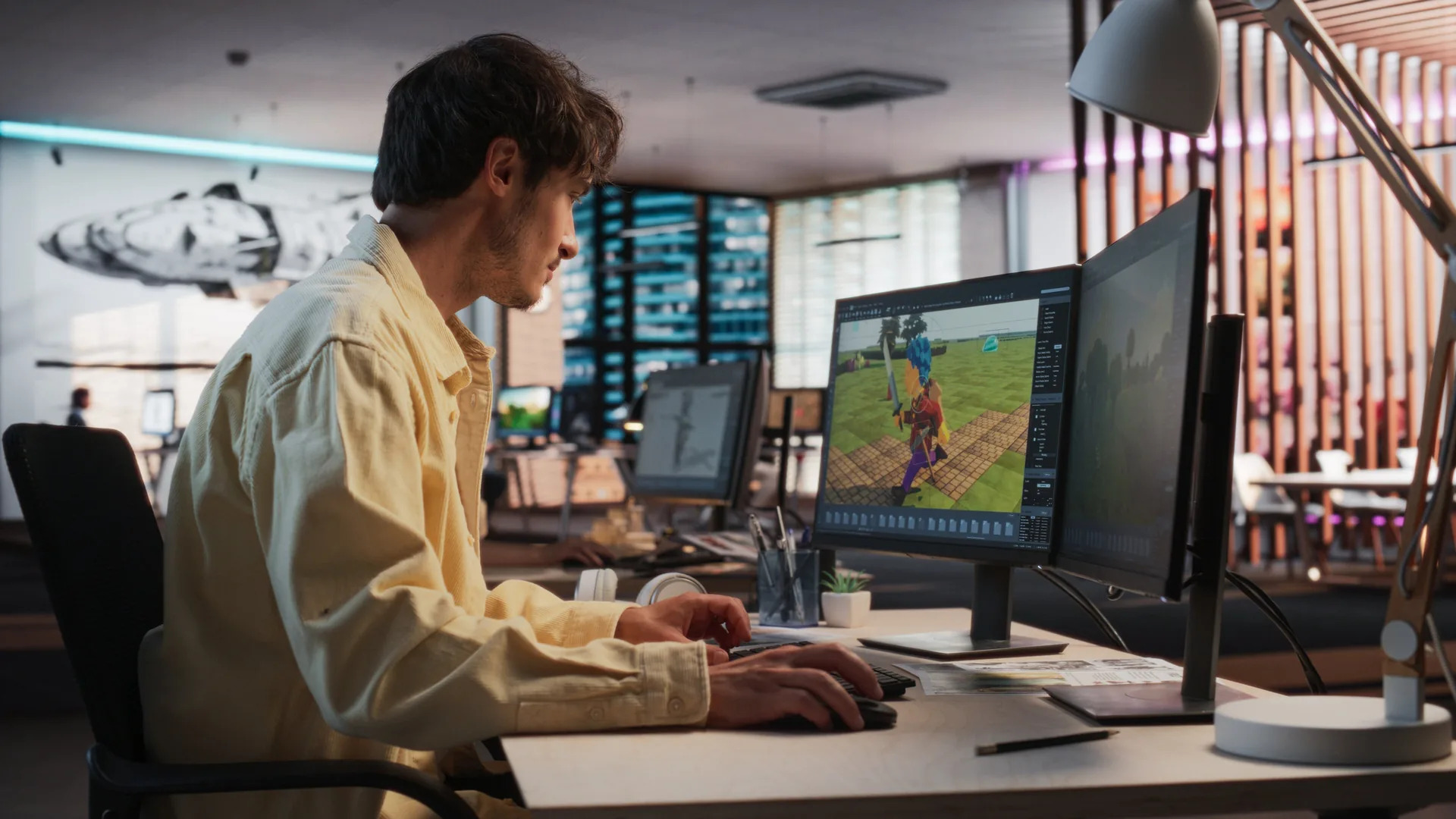
Few technologies have generated as much noise as artificial intelligence. Some promise it will make games on its own; others think it’s just a passing trend. The reality is somewhere in between: used well, AI is a huge accelerator, but it still needs a team that knows what it’s doing. Let’s separate what’s useful from the hype.
Where it adds value today
- Concepts and ideas: exploring many visual directions in a short time, before an artist develops the chosen one.
- Prototyping: putting together quick playable versions to validate an idea before investing in it.
- Programming: code assistants that speed up repetitive tasks and help catch bugs.
- 3D assets: support with textures, variations and optimisation.
- Testing: bots that play through levels looking for bugs, and analysis of gameplay data.
- Inside the experience: characters with more natural dialogue, virtual assistants and experiences that adapt to each player.
What it (still) can’t do
- Replace creative direction: it generates options, but someone has to choose, decide and give everything coherence.
- Keep things consistent: maintaining a uniform visual style across a whole project still takes artists’ work.
- Deliver final quality on its own: what it generates usually needs reviewing and polishing.
- Take care of rights: you need to check tool licences and data sources so you don’t put intellectual property at risk.
- Handle privacy: if an experience uses AI with user data, it has to comply with data protection rules such as the GDPR.
What to ask a studio
- Which stages do you use AI in, and which don’t you?
- Who reviews what it generates?
- Which tools do you use and how do you manage their licences?
- How do you protect my project’s data and my users’ data?
- How does it affect deadlines and budget?
Conclusion
Used well, AI lets you go further with the same resources: more ideas, faster iterations and more time for what really makes a difference. The key is combining it with human judgement. That’s how we use it at BrightWave: find out how we integrate it into our pipeline.
Pocas tecnologías han generado tanto ruido como la inteligencia artificial. Hay quien promete que hará juegos por sí sola y quien cree que es una moda pasajera. La realidad está en medio: bien usada, la IA es un acelerador enorme, pero sigue necesitando un equipo que sepa lo que hace. Separemos lo útil del humo.
Dónde aporta valor hoy
- Conceptos e ideas: explorar muchas direcciones visuales en poco tiempo, antes de que un artista desarrolle la elegida.
- Prototipado: montar versiones jugables rápidas para validar una idea antes de invertir en ella.
- Programación: asistentes de código que agilizan las tareas repetitivas y ayudan a detectar errores.
- Assets 3D: apoyo en texturas, variaciones y optimización.
- Testing: bots que recorren los niveles en busca de fallos y análisis de los datos de partida.
- Dentro de la experiencia: personajes con diálogos más naturales, asistentes virtuales y experiencias que se adaptan a cada jugador.
Lo que (todavía) no hace
- Sustituir la dirección creativa: genera opciones, pero alguien tiene que elegir, decidir y darle coherencia a todo.
- Mantener la coherencia: conseguir un estilo visual homogéneo en todo un proyecto sigue requiriendo el trabajo de artistas.
- Dar la calidad final por sí sola: lo que genera suele necesitar revisión y retoque.
- Ocuparse de los derechos: hay que revisar las licencias de las herramientas y el origen de los datos para no poner en riesgo la propiedad intelectual.
- Gestionar la privacidad: si una experiencia usa IA con datos de usuarios, debe cumplir la normativa de protección de datos, como el RGPD.
Qué preguntar a un estudio
- ¿En qué fases usáis IA y en cuáles no?
- ¿Quién revisa lo que genera?
- ¿Qué herramientas usáis y cómo gestionáis sus licencias?
- ¿Cómo protegéis los datos de mi proyecto y los de mis usuarios?
- ¿Cómo repercute en los plazos y el presupuesto?
Conclusión
Bien usada, la IA permite llegar más lejos con los mismos recursos: más ideas, iteraciones más rápidas y más tiempo para lo que de verdad marca la diferencia. La clave es combinarla con criterio humano. Así la usamos en BrightWave: descubre cómo la integramos en nuestro pipeline.